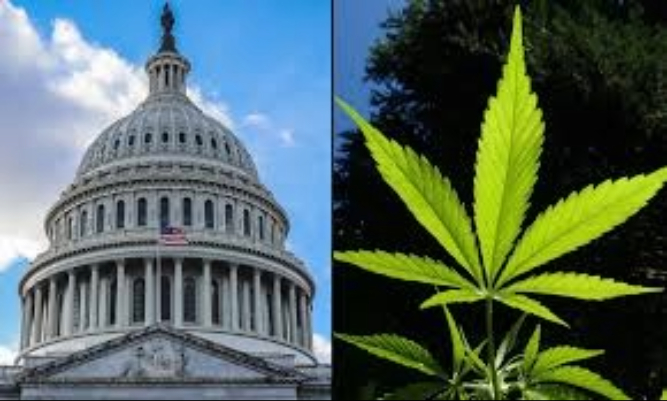
The November 2025 federal ban on hemp-derived THC products, signed into law as part of the government spending bill last week, will meet California’s AB 8 (Aguiar-Curry) signed into California law by Governor Newsom in September, with AB 8 Phase 1 taking effect January 1, 2026, and the federal ban following on November 12, 2026. With AB 8 full implementation scheduled to arrive as of January 1, 2028, the hemp industry in California currently faces a three-stage regulatory squeeze, front-loaded over the next twelve months:
- January 1, 2026 (AB 8 Phase 1): Smokable hemp banned; extract purity standards of 99% THC-free mandatory; tobacco retailers prohibited from possessing intoxicating hemp products under Business and Professions Code Section 22980.6.
- November 12, 2026 (Federal Ban Effective): H.R. 5371 Section 781 excludes from the hemp definition products with cannabinoids synthesized outside the plant, products exceeding 0.3% total tetrahydrocannabinols (including THCA), and finished products with more than 0.4 mg combined total THC per container.
- January 1, 2028 (AB 8 Full Implementation): Cannabis licensing, METRC tracking, 15% excise tax, and dispensary-only sales for intoxicating products.
Current Regulatory Timeline Overview
| Date | Regulatory Development | Action |
|---|---|---|
| Jan 1, 2026 | AB 8 Phase 1: Smokable hemp ban, purity mandate, tobacco retailer restrictions | Discontinue smokable/full-spectrum hemp; purge tobacco retailers |
| Feb 10, 2026 | FDA publishes cannabinoid lists and container definition clarification | Review FDA guidance; assess product compliance |
| Nov 12, 2026 | Federal ban effective: new hemp definition excludes synthetic cannabinoids and products >0.4 mg THC/container | Federal deadline for intoxicating hemp compliance |
| Jan 1, 2028 | AB 8 full implementation: licensing, METRC, excise tax, dispensary-only | Complete transition to licensed cannabis or exit market |
H.R. 5371: The New Federal Hemp Definition
H.R. 5371 Section 781 fundamentally changes what qualifies as “hemp” under federal law. Rather than simply setting THC limits, the law creates exclusions from the hemp definition—meaning products falling within these exclusions are now controlled substances under the Controlled Substances Act.
The new definition provides that “hemp” is Cannabis sativa L. with total tetrahydrocannabinols concentration (including THCA) of not more than 0.3% on a dry weight basis, but specifically excludes:
1. Intermediate Hemp-Derived Cannabinoid Products containing:
- Cannabinoids that cannot be produced naturally in the cannabis plant (i.e., synthesized or manufactured outside the plant), OR
- More than 0.3% total THC (including THCA) on a dry weight basis, OR
- Any cannabinoids with “similar effects on humans or animals as THC”
2. Final Hemp-Derived Cannabinoid Products containing:
- Cannabinoids that cannot be produced naturally in the cannabis plant, AND
- Greater than 0.4 milligrams combined total per “container” of THC, THCA, or cannabinoids with “similar effects” to THC
3. Seeds from Cannabis Plants Exceeding 0.3% THC
Under the original definition of hemp in the 2018 Farm Bill, cannabis seeds were considered legal hemp due to the lack of quantifiable THC in those seeds (a position the DEA supported), which allowed companies in the state-legal cannabis industry to ship seeds interstate. Under the new law, any seed that “exceeds [a total THC concentration] of 0.3 percent in the plant” is excluded from the new definition of hemp.
FDA’s 90-Day Mandate: Critical Regulatory Guidance Coming in February 2026
Within 90 days of November 12, 2025 (by approximately February 10, 2026), the FDA must publish:
- A list of cannabinoids capable of being naturally produced by Cannabis sativa L.
- A list of all tetrahydrocannabinol class cannabinoids known to be naturally occurring in the plant
- A list of all other known cannabinoids with similar effects to THC
- Additional clarification on the definition of “container”
These FDA lists will be determinative for compliance. Cannabinoids not on the “naturally occurring” list will be presumptively banned if they produce intoxicating effects. Cannabinoids on the “similar effects to THC” list will be subject to the 0.4 mg per-container limit.
AB 8 Phase 1 Starts January 1, 2026
1. Smokable Hemp Ban
Effective January 1, 2026, all hemp flower, prerolls, and inhalable products containing any hemp-derived cannabinoids become illegal for retail sale in California. This includes hemp vapes, vape cartridges, and prerolls regardless of THC content. Retailers must discontinue these product lines immediately. Enforcement will proceed through product seizure and retailer licensing actions by state and local authorities.
2. Industrial Hemp Extract Purity Mandate: 99% Pure, Zero THC
Industrial hemp raw extract used in food, beverages, dietary supplements, or non-cannabis products must achieve >99% purity and contain zero detectable THC and zero synthetic cannabinoids to remain legal outside the licensed cannabis system. This effectively eliminates full-spectrum CBD and hemp extracts from non-regulated retail. Only CBD isolate (>99% pure, zero THC), CBN isolate, and fiber-derived products remain legal in general retail. Manufacturers must reformulate to isolate-based products or transition to cannabis licensing by January 1, 2026. Testing via California Department of Cannabis Control-approved laboratories is mandatory.
3. Tobacco Retailer Prohibition
Business and Professions Code Section 22980.6 prohibits tobacco retailers from possessing, storing, or selling cannabis or any product containing THC or “comparable cannabinoids” not authorized by state cannabis regulations. Effective January 1, 2026:
- First violation: $1,000 civil penalty
- Second violation (within 5 years): $2,000 civil penalty + 5-day license suspension
- Subsequent violations: License revocation (permanent loss of tobacco retailer license)
Enforcement by CDTFA and local agencies is immediate. Any continued possession exposes retailers to seizure, fines, and license loss.
4. 0.3% Total THC/THCA Dry Weight Limit
All products containing hemp-derived cannabinoids for non-cannabis use are limited to 0.3% total THC/THCA on dry weight basis, in line with the new federal industrial hemp definition. This includes delta-9, delta-8, THCA, delta-10, and all isomers. Most delta-8, delta-10, and THCA products exceed this limit and are non-compliant.
Federal Ban Starts November 12, 2026
Federal Provisions (H.R. 5371)
The new federal law redefines hemp to exclude products with:
- More than 0.3% total tetrahydrocannabinols (including THCA) by dry weight under the amended Agricultural Marketing Act of 1946
- Greater than 0.4 mg combined total per container of THC/THCA or cannabinoids with similar effects
- Any cannabinoid synthesized or manufactured outside the cannabis plant
AB 8 Provisions Impacted by the Federal Ban
1. Definition and Regulation of Intoxicating Hemp/Cannabinoid Products
AB 8 expands the definition of cannabis products and concentrates under the Medicinal and Adult-Use Cannabis Regulation and Safety Act (MAUCRSA). This means any product—including those from industrial hemp—that is transformed into a concentrate or contains concentrated cannabinoids (excluding pure CBD isolate and pure CBN isolate), must be licensed, tested, and tracked through the California cannabis licensing framework.
The federal ban aligns and elevates these restrictions, as it:
- Excludes from the definition of “hemp” cannabinoids synthesized or manufactured outside the plant;
- Prohibits products with more than 0.4 mg combined total THC/THCA per retail container;
- Gives the FDA and HHS broad discretion in identifying “similar effects” cannabinoids.
2. Track-and-Trace, Interstate Shipment, and Online Sales
AB 8 mandates all intoxicating hemp cannabinoid products (except qualifying isolate) be sold only through licensed cannabis businesses and subjects them to the California Cannabis Track-and-Trace (METRC) system and cannabis excise taxes, as detailed in Business and Professions Code § 26000. The federal ban preempts any state carveout for hemp products not qualifying under the new definition, with interstate shipment and online sales subject to federal enforcement. AB 8 allows through-shipment; federal law prohibits interstate commerce of products excluded from the hemp definition. Federal law controls.
3. Isolate Carveouts and Federal Uncertainty
AB 8 exempts both pure CBD isolate (>99% purity, zero THC) and pure CBN isolate (>99% purity, zero THC) from its cannabis restrictions, permitting non-intoxicating isolate products in general retail. CBN (cannabinol), a naturally occurring cannabinoid produced as cannabis ages, is considered minimally intoxicating and was included in the carveout alongside CBD.
However, federal uncertainty now overshadows both carveouts:
Marketed health claims invite FDA scrutiny and enforcement regardless of state compliance. Under H.R. 5371, both CBD and CBN isolates must have no more than 0.4 mg combined THC/THCA per container and cannot be sold as food, animal feed, or dietary supplements without FDA approval. The FDA must publish by February 2026 lists identifying cannabinoids with “similar effects to THC” (determined by HHS Secretary): if CBN or CBD appear on that list, the 0.4 mg per-container limit will apply, potentially rendering larger bottles/tinctures non-compliant. Currently, California’s $2+ billion CBD food/beverage market operates in federal regulatory limbo. Whether FDA will continue enforcement tolerance or intensify scrutiny remains uncertain.
4. Synthetic and Semi-Synthetic Cannabinoid Prohibition
AB 8 explicitly bans synthetic cannabinoids (e.g., delta-8, delta-10), broadening the scope beyond delta-9 THC. The federal ban codifies this exclusion by removing chemical conversion and isomerization cannabinoids from the hemp category altogether, making virtually all delta-8, delta-10, HHC, THCP, and similar intoxicating products federally illegal.
Note: The FDA must publish, by February 2026, authoritative lists of naturally occurring cannabinoids and those with “similar effects” to THC, which will anchor federal enforcement and override any remaining California exceptions.
Conclusion
California’s AB 8 provides a phased regulatory transition from unregulated hemp to licensed cannabis in the market across 27 months. The federal ban via H.R. 5371 compresses this timeline and adds federal criminal liability. The result is a three-stage squeeze: AB 8 Phase 1 (Jan 1, 2026), Federal Ban Effective (Nov 12, 2026), AB 8 Full Implementation (Jan 1, 2028) designed to re-shape, and restrict, the legal market for hemp.