Raising Money With a Buyer at the Door: A Canadian Cannabis Fight With Lessons for California Operators

The Alberta Securities Commission refused to stop Aurora from selling shares during Curaleaf’s hostile bid. California operators rarely face tender offers, but raising money while a buyer is at the door raises the same questions: who can issue equity, what duties apply, and when new investors become owners in DCC’s eyes.
New in the Daily Journal: The Cannabis Laws of the 2026 California Legislative Session
My Daily Journal article covers the cannabis laws from California’s 2026 legislative session: packaging, beverage labeling, laboratory testing, hemp cannabinoids and enforcement. Most changes take effect in 2027 or later.
What SB 1064 and AB 179 Predict About DCC’s Combined Activities and Ownership Rulemaking
The California Department of Cannabis Control’s Summer 2026 rulemaking, “Combined Activities License and Ownership Updates,” will implement two 2024 statutes. SB 1064 (Ch. 991) authorizes combined cannabis activities at one premises under Business and Professions Code § 26001(m) and directs DCC to build a combined-activities licensing process under § 26070. AB 179 (Ch. 997) narrows Live Scan fingerprint requirements under § 26051.5(a)(1) so that only owners defined in § 26001(aq)(1)–(3) — the 20% aggregate holder, CEO or equivalent, and nonprofit board members — must submit fingerprints. The package will primarily amend 4 CCR § 15002 and § 15003 among 15 affected regulations. This post predicts what DCC’s proposed regulations will and will not include, applies the California APA purpose-and-scope constraints under Government Code §§ 11342.1 and 11342.2, and identifies the four drafting moves operators should prepare for now.
How California Retailers Are Splitting One A-and-M-Designated License into Two Under the DCC’s Emergency Rule

California’s June 4, 2026 emergency rule lets a dual-designated A and M retailer hold each license in a separate entity on the same premises. Here’s how.
The Hemp Ban’s Real Deadline Isn’t November 12. It’s September 13.
Every California hemp operator has November 12, 2026 circled — the day the federal hemp ban (Public Law 119-37) turns most intoxicating cannabinoid products into Schedule I controlled substances. But if the ban forces you to cut staff, your real legal deadline is roughly September 13, sixty days earlier, under the federal and California WARN Acts. Here’s why “the government banned my product” won’t excuse late notice, and how to plan the transition now.
Beyond Rescheduling: Who Keeps the “$1.6 Billion” in 280E Relief — the U.S. Treasury or Large Operators?
Rescheduling won’t settle 280E — the unpublished IRS guidance will. Who keeps the disputed $1.6 billion, why prior-year refunds carry real risk, and what California operators should weigh before filing anything.
What the Enforcement Numbers Don’t Show: California’s Intoxicating Hemp Beverage Market and the July 1 Consolidation
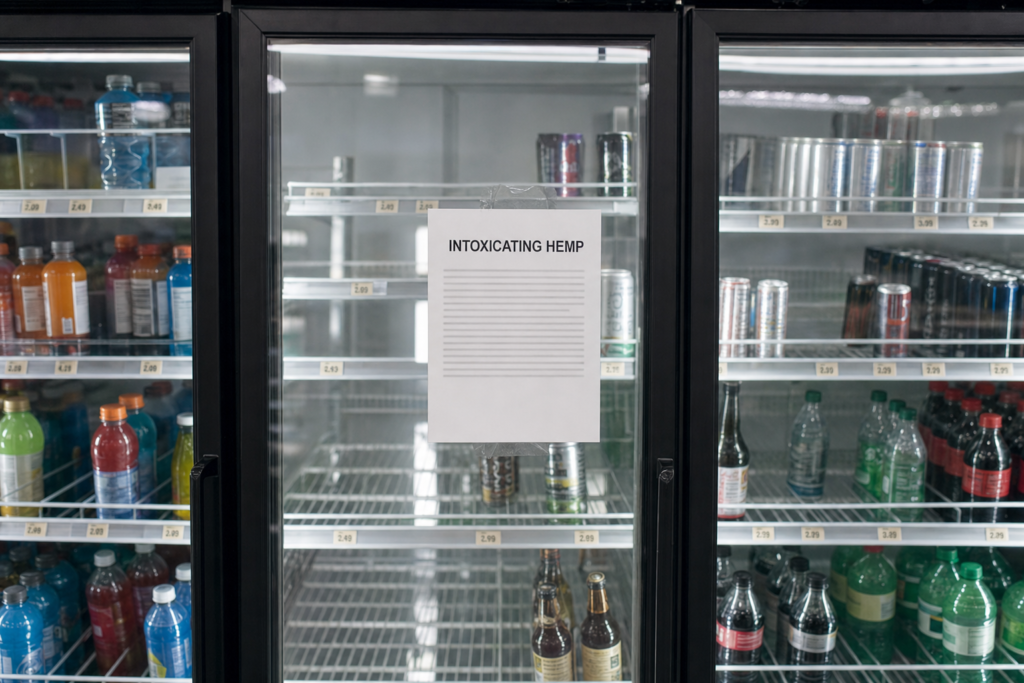
California’s hemp-enforcement numbers look like a win. Read as Holmes’ “bad man” would, they map where the intoxicating hemp beverage trade moved — and how fast the July 1, 2026 consolidation closes in on it.
While Rescheduling Unifies Some Federal Tax Treatment, California Cannabis and Hemp Keep Diverging Along the THC Line
Marijuana rescheduling now unifies some federal tax treatment, but California cannabis and hemp keep diverging along the THC line. This post walks operators and investors through what the shift means for entity choice, Section 280E, ownership disclosure, exits, and staying compliant — and why the cannabis-hemp divide is widening even as one federal tax answer emerges.
The April 22 Rescheduling Order: What We Know, What We Don’t, and What to Watch Before June 29
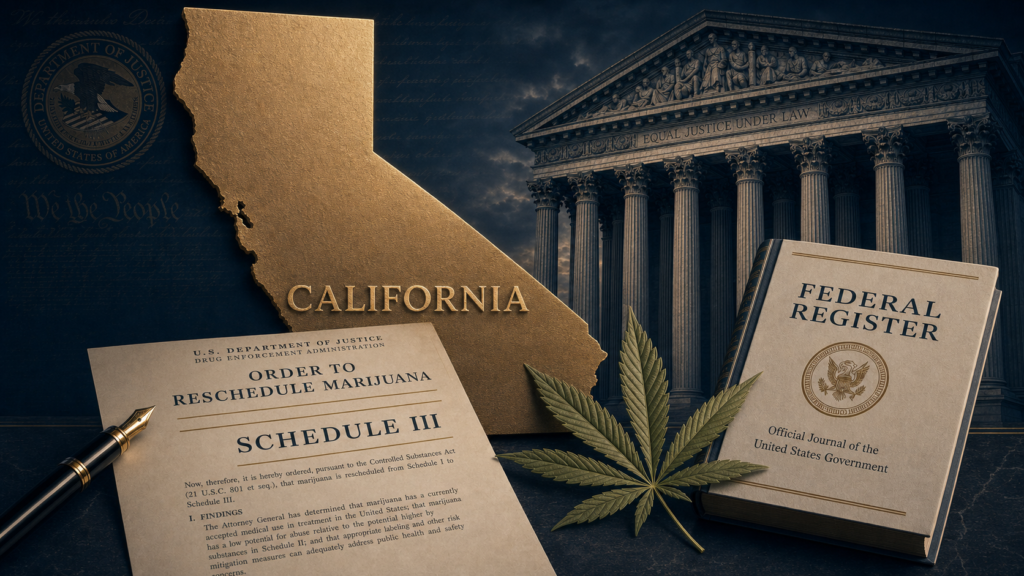
The April 22, 2026 rescheduling order moves state-licensed medical marijuana to Schedule III — but leaves adult-use cannabis in Schedule I, creates contested treaty-compliance mechanisms, and opens a June 27 DEA registration deadline that demands immediate attention from California dual A/M operators. Here is what we know, what remains genuinely uncertain, and what to watch before June 29.
California M-License Operators in a Bifurcated Federal World: A Legal Deep Dive on DOJ’s April 2026 Rescheduling Order
The DOJ’s April 22, 2026 order rescheduling medical marijuana to Schedule III is the most significant shift in federal cannabis law in a generation — but it is narrow, legally fragile, and comes with a hard deadline. Here is what California M-license operators and investors need to know right now.
Where the Law Meets the Ground: A Spring 2026 Field Report for California Cannabis Operators and Investors

California’s spring 2026 cannabis landscape is being shaped by ground-level events that demand immediate attention from operators and investors: nine Santa Barbara County licenses revoked over odor compliance failures, geopolitical fuel price shocks stress-testing distribution contracts across the state, a wave of M&A deals introducing new joint venture and earnout structures, and pricing data from Michigan and the East Coast confirming that California’s price compression is structural — not temporary. California cannabis attorney Shay Aaron Gilmore analyzes what it means for your business.
Physician-Furnished, Legally Frozen: How AB 8 Locks California Out of the Federal Hemp-CBD Medicare Benefit
California’s AB 8 bans detectable THC in hemp products sold outside licensed dispensaries — putting the state on a direct collision course with the new CMS Substance Access BEI, which allows physicians to furnish hemp-CBD products worth up to $500 annually to Medicare patients. Here’s what ACOs, hemp businesses, and healthcare providers need to know.
California Cannabis Regulatory Compliance in 2026: What Local & State Headlines Are Telling Operators
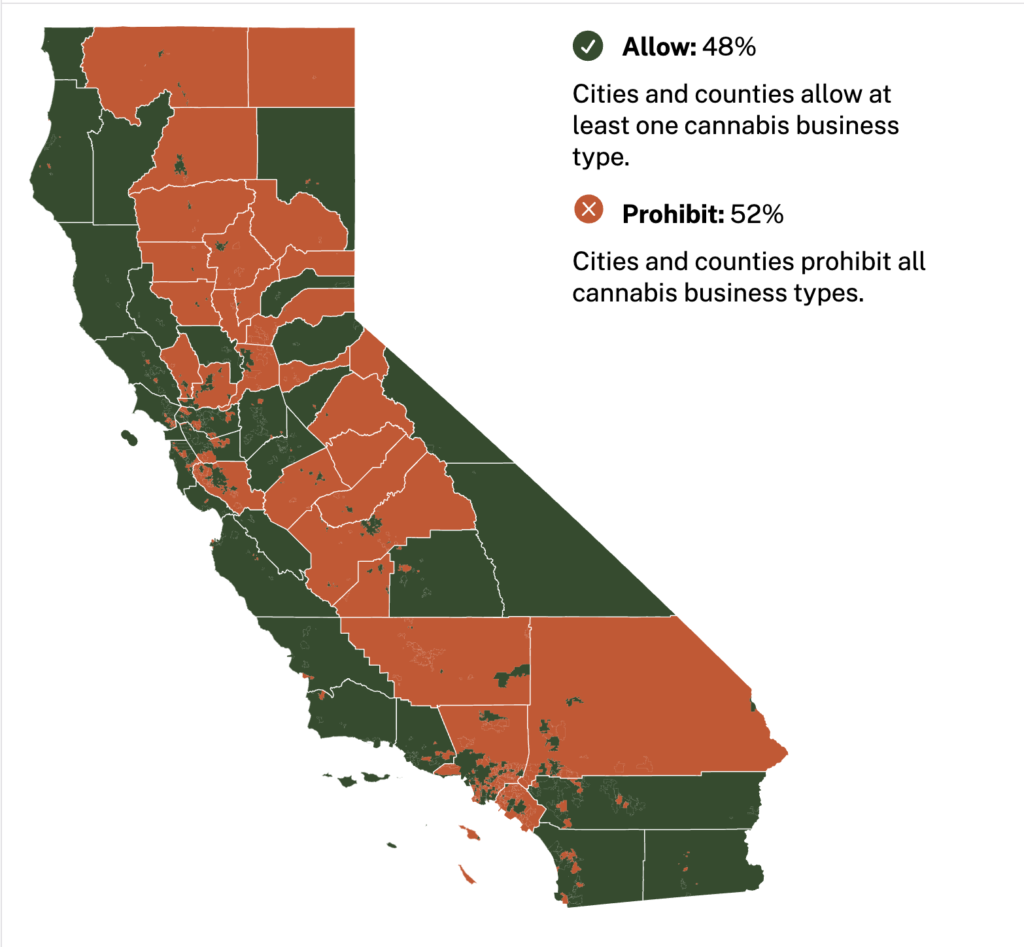
Update (October 7, 2026): The Continuing Appropriations and Extensions Act, 2027 (P.L. 119-103), enacted September 2, 2026, split the effective date of the federal hemp redefinition in § 781 of P.L. 119-37. The exclusion for intermediate and final hemp-derived cannabinoid products containing cannabinoids the cannabis plant cannot naturally produce takes effect November 12, 2026. The […]
Administrative Law and the California Cannabis Industry Now: New Rulemaking and Appeals Process
By Shay Aaron Gilmore | The Law Office of Shay Aaron Gilmore | shaygilmorelaw.com Right now, in the spring of 2026, California cannabis administrative law is as active as it has ever been. A new multipack rulemaking is open for public comment through April 13, 2026. The Cannabis Control Appeals Panel is hearing contested license […]
California Cannabis & Hemp Industry and Legal Update: What Operators and Investors Need to Know
Update (October 7, 2026): The Continuing Appropriations and Extensions Act, 2027 (P.L. 119-103), enacted September 2, 2026, split the effective date of the federal hemp redefinition in § 781 of P.L. 119-37. The exclusion for intermediate and final hemp-derived cannabinoid products containing cannabinoids the cannabis plant cannot naturally produce takes effect November 12, 2026. The […]