Cannabis and Hemp Business Law Firm Serving the Eastern Sierra
Cannabis and Hemp Business Attorney Serving Clients Throughout California
The Law Office of Shay Aaron Gilmore has donated hundreds of hours of pro-bono legal services to the cannabis social equity movement, helped dozens of businesses procure or maintain state and local commercial cannabis licenses and permits throughout California, and successfully closed millions of dollars in mergers and acquisitions and other corporate transactions for cannabis and hemp investor and operator clients.
A California attorney for over 20 years, established as a California cannabis and hemp law leader focused on the Eastern Sierra, Shay Aaron Gilmore provides proven legal solutions for investors and operators to launch, fund and grow ventures in compliance with the cannabis and hemp industries’ ever-changing laws, regulations and policies.
In addition to the Eastern Sierra, the Law Office of Shay Aaron Gilmore also serves clients in:
Legal Practice Areas in the Eastern Sierra, California
The Law Office of Shay Aaron Gilmore supports the ongoing success of our The Eastern Sierra cannabis and hemp industry clients in the following practice areas, providing our The Eastern Sierra operator and investor clients with customized knowledge and cost-effective legal counsel tailored to reach their specific goals:
Shay volunteers as an active member and leader of top trade and professional organizations like the California Cannabis Industry Association, and the International Cannabis Bar Association. Shay founded the Cannabis Practitioners Group of the California Lawyers Association, and he serves on the Board of Directors of California NORML. The Los Angeles/San Francisco Daily Journal has named Shay to its list of the Top 20 Cannabis Lawyers in California. Shay has been recognized by Super Lawyers® Magazine as a Northern California Super Lawyer in Cannabis Law and as one of the Top 100 Lawyers in Northern California across all practice areas. Chambers and Partners has ranked Shay in Band 4 for Cannabis Law: Western United States in its flagship Chambers USA attorney ranking guide. A complete list of Shay’s recent presentations, white papers, and legal articles is available on the Media page. Shay regularly publishes content for the Eastern Sierra on his Cannabis and Hemp Law Blog.
Eastern Sierra Cannabis and Hemp Business Resources
Whether you are new to the California cannabis or hemp industries, or you are an established California operator or investor expanding your business or investment into the Eastern Sierra, understanding the legal requirements and regulations impacting the local cannabis and hemp industries is vital to your success. Here are just a few local resources for cannabis and hemp businesses to use in answering questions regarding cannabis and hemp legislation, enforcement and regulation in Eastern Sierra jurisdictions.
- Inyo County Commercial Cannabis Regulation
- Inyo County Commercial Cannabis Licensing
- City of Bishop Cannabis Regulations
- Mono County Cannabis Regulations
- Mono County Cannabis Business Tax
- Town of Mammoth Lakes Cannabis Regulatory Framework
- Inyo-Mono Counties Agricultural Commissioner
- California Department of Cannabis Control (DCC)
- CDFA Industrial Hemp Program
Contact The Law Office of Shay Aaron Gilmore today!
Frequently Asked Questions
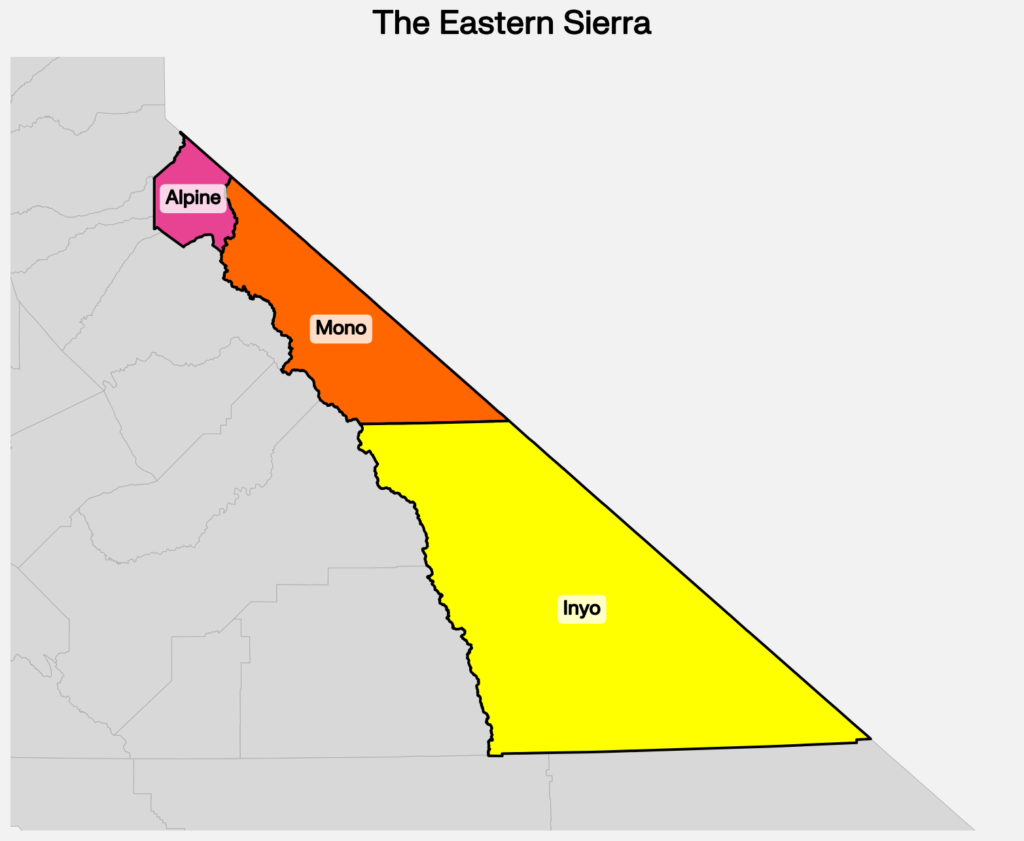
Every Eastern Sierra cannabis business must hold both a local permit and a state license from the Department of Cannabis Control (DCC), and the local permit always comes first. The three Eastern Sierra counties — Alpine, Mono, and Inyo — treat commercial cannabis very differently. Inyo County permits commercial cannabis: on January 16, 2018 its Board of Supervisors adopted three ordinances (effective February 16, 2018) allowing cultivation, manufacturing, retail, distribution, delivery, and testing in designated zones, each requiring a Conditional Use Permit (CUP) approved by the Planning Commission plus an Inyo County Commercial Cannabis Business License (County Code Chapters 5.40 and 3.50). Mono County also allows licensed commercial cannabis, requiring a Cannabis Use and Operation Permit through its Community Development Department plus a county business license and payment of the county’s cannabis business tax. Alpine County, by contrast, prohibits commercial cannabis activity within its borders under its County Cannabis Code (§ 7.04.030). As of January 1, 2026, all state cannabis licenses must be annual licenses, as provisional licenses have sunset.
Cities within these counties add another layer. The City of Bishop (in Inyo County) adopted its own retail cannabis ordinance and permits a limited number of storefront retailers through a development agreement and city approval process, while the Town of Mammoth Lakes (in Mono County) allows medicinal and adult-use retailers, manufacturers, cultivators, distributors, and testing facilities under Chapter 5.38 of its Municipal Code. A lawyer experienced with Eastern Sierra cannabis law can help navigate these varying local requirements.
Under California law, all industrial hemp growers must register with the county agricultural commissioner before planting and obtain a state registration from the California Department of Food and Agriculture (CDFA). In the Eastern Sierra, Inyo and Mono counties share a single Agricultural Commissioner’s office (the Inyo-Mono Agricultural Commission), which handles hemp registration questions for both counties — though hemp activity in these counties has historically been regulated through, or limited by, their cannabis ordinances, and indoor-only requirements may apply. Alpine County prohibits commercial cannabis and has no commercial hemp program of its own. Timing depends on whether the county is currently accepting registrations and on completing the CDFA state registration, which can typically be processed within a few weeks once county-level requirements are satisfied.
Because local hemp rules in the Eastern Sierra change and can be tightly tied to the cannabis ordinances, prospective hemp cultivators should confirm the current status of local hemp regulation with the Inyo-Mono Agricultural Commissioner before committing to a site. An attorney experienced in Eastern Sierra hemp law can help assess these requirements county by county.